 Pota
How to Track Calories When Eating Out (Without Ruining the Meal)
You're sitting at your favorite restaurant, menu in hand, and your brain is doing mental gymnastics. The grilled salmon looks amazing, but how many calories is it? Is that side salad drenched in oil? Does the chef's special even exist on MyFitnessPal? And now your friends are ordering appetizers and you're stuck doing math in your head while they're laughing about something that happened at work.
This is the reality of trying to track calories while eating out—it's awkward, imprecise, and it can genuinely suck the joy out of dining.
But here's the truth: eating at restaurants and tracking your nutrition aren't mutually exclusive. You don't have to choose between enjoying your meal and staying on track. You just need strategies that actually work in the real world, not ones that sound good in a podcast but fall apart the moment the breadbasket arrives.
The Core Problem: Why Restaurant Eating Breaks Your Tracker
Before we talk solutions, let's be honest about what we're dealing with. Restaurants aren't in the business of helping you lose weight. They're in the business of making food taste so good you come back next week.
The portions are huge. A typical restaurant chicken breast is larger than anything you'd cook at home. The oil, butter, and salt are generous. The starches are real. And the restaurants? Many of them have zero incentive to be honest about calories. Some post estimates that are significantly lower than reality, either by accident or design.
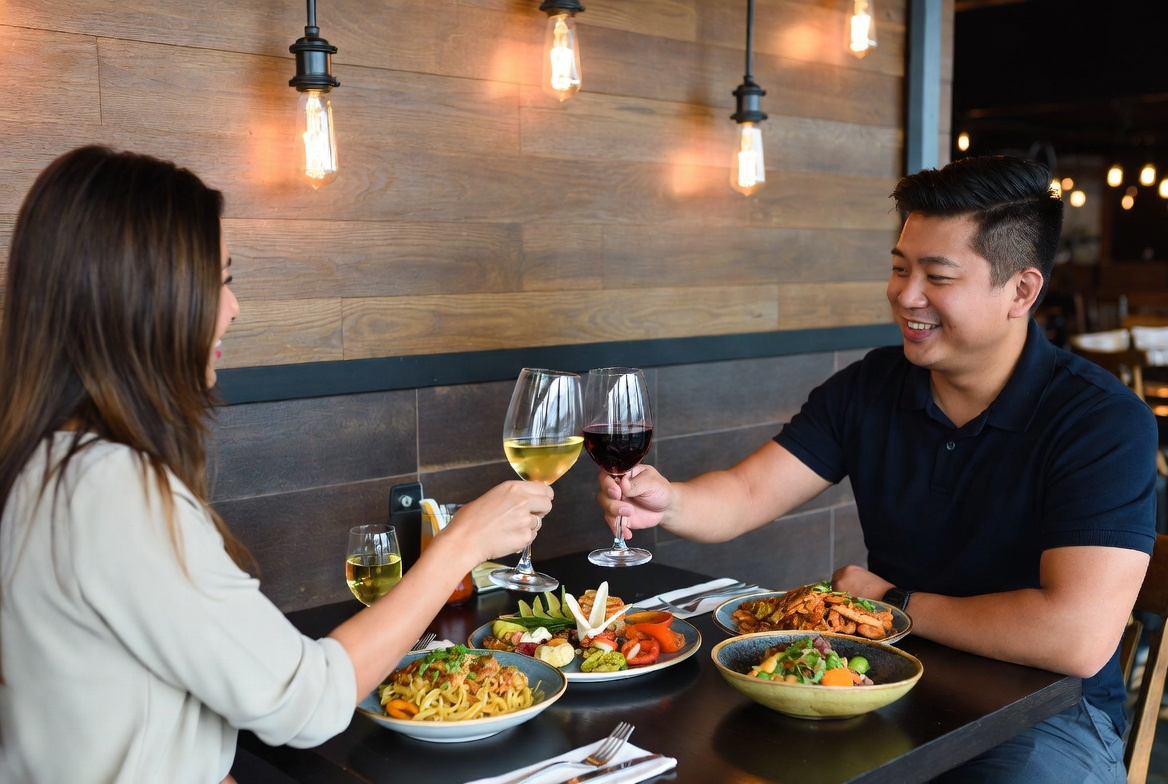
Then there's the social layer. You're not eating alone. You're there with people who might ask "Why are you photographing your food?" or worse, assume you have disordered eating habits just because you're trying to be mindful. That pressure—real or imagined—makes the whole thing feel complicated.
The other issue is unpredictability. At home, you control everything. You know your chicken breast weighed 150 grams. You know you used two tablespoons of olive oil. At a restaurant? You're guessing. And guessing feels terrible when you've been tracking meticulously all week.
Strategy 1: The Anchor Meal Technique
This is my favorite strategy because it actually reduces stress instead of adding to it.
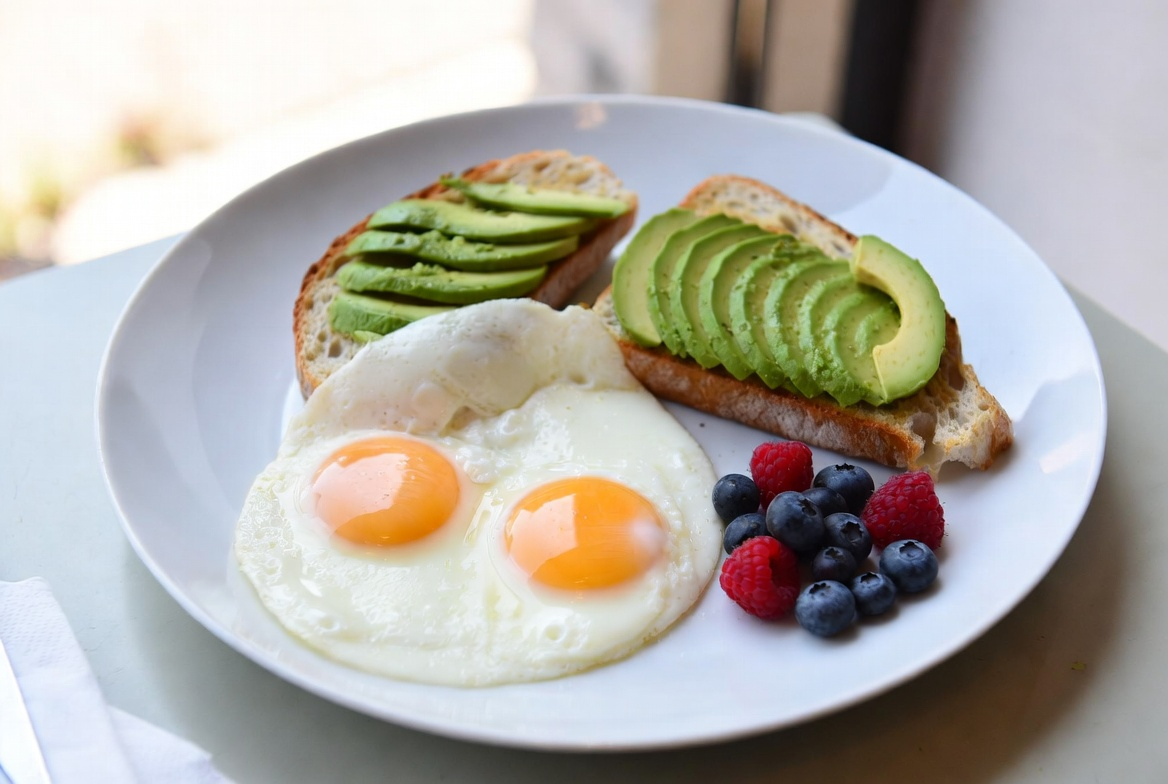
The idea is simple: eat something you know the calories of before or after your restaurant meal. If you know you're going out for dinner, eat a light lunch with exact measurements. Eggs, oatmeal, a protein shake—something straightforward that you can log perfectly.
This anchors your day. Now, when you're at the restaurant guessing about that pasta, you're not guessing blindly about your entire day's intake. You have a solid foundation.
The reverse works too. If you're going out for a big lunch, keep your dinner really clean and measured. Toast and grilled chicken. Greek yogurt and berries. Something boring but logged accurately.
This approach has an unexpected benefit: it reduces decision fatigue. You've already nailed your nutrition once today. The restaurant meal is now part of a bigger picture, not the only thing you're tracking. That psychological shift is huge.
Strategy 2: Visual Portion Estimation Gets Better With Practice
Nobody's born knowing how to estimate portions. It's a skill you develop.
Start by using your hand as a reference. A palm-sized serving of protein (chicken, fish, steak) is roughly 25-35 grams of protein. A fist-sized serving of carbs is about 150-200 calories. A thumb-sized portion of fat is around 100 calories. These are rough guides, but they're better than pure guessing.
At restaurants, you can also use the plate itself as a reference. Most dinner plates are about 10 inches in diameter. If protein takes up a quarter of the plate, carbs take up another quarter, and vegetables take up the rest, you've got a decent visual anchor for portion size.
The key is to estimate high, not low. If you think something is 450 calories, log it as 500. You're tracking for consistency and awareness, not punishing yourself if you're off by 50 calories. That precision is a myth anyway.
After a few weeks of doing this, something weird happens: you actually get good at it. You start to develop an intuition for what 200 calories of pasta looks like versus what 200 calories of rice looks like. Your brain learns. Trust it.
Strategy 3: Choose Menu Items Strategically
Not all restaurant food is equally hard to estimate.
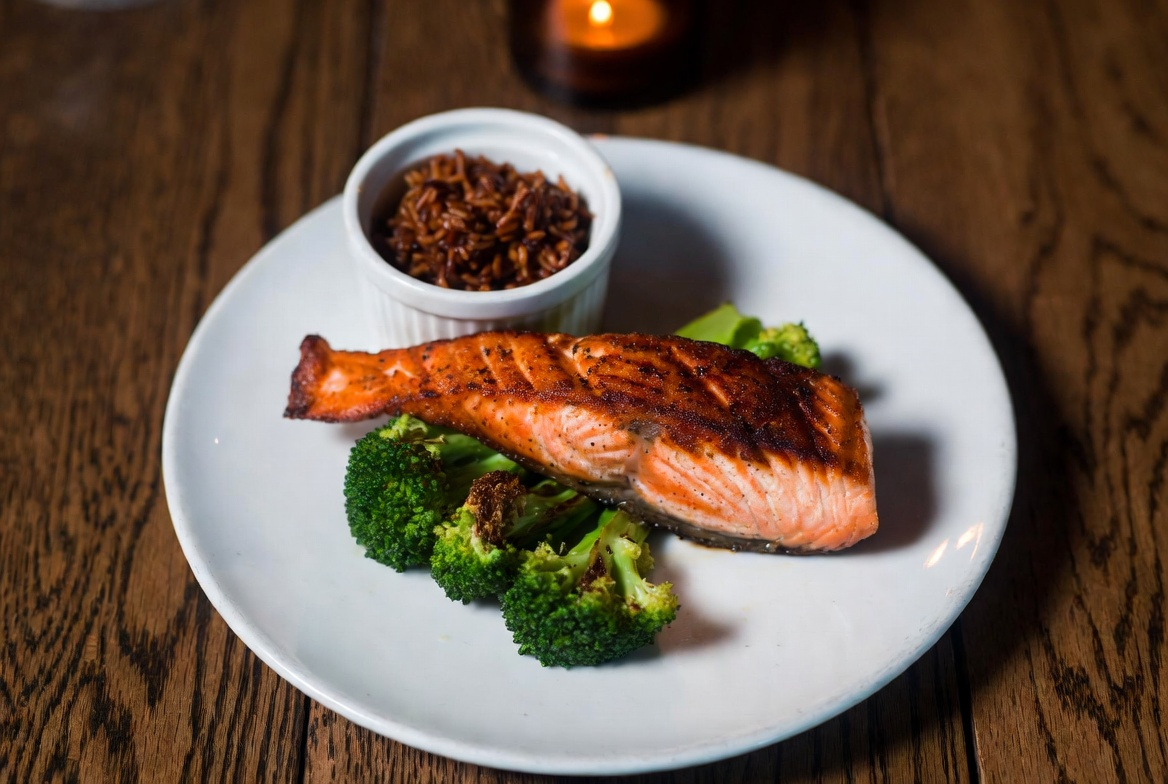
A grilled chicken breast with roasted vegetables and rice is way easier to log than a mystery casserole with a cream sauce you can't identify. That's not coincidence. Some menu items are inherently more transparent than others.
Seek out: - Grilled proteins: Fish, chicken, steak. Ask for it without added oils. - Simple starches: Rice, potatoes, bread. You know what these are. - Vegetables that can't hide: Broccoli, asparagus, carrots. They are what they are. - Salads with dressing on the side: This is the one time asking for special requests doesn't feel weird.
Avoid (or estimate high): - Anything with cream sauce: You'll always underestimate. - Fried foods: The oil content is impossible to know. - Casseroles and mixed dishes: Too many variables. - Cheese-heavy items: It adds up fast and you can't see it.
This isn't about eating boring food. A grilled salmon fillet with lemon and garlic isn't boring. Rice pilaf with herbs is delicious. But they're also estimable in a way that "Chef's special prawns with seasonal sauce" is not.
Strategy 4: The 80% Rule
Here's what kills most people's nutrition tracking: perfectionism.
You aim for 2000 calories, you hit 2080, and suddenly you feel like you've failed. You spiral. You decide tomorrow will be "perfect" (it won't be). You stress about the tiny overage.
Stop.
If you're within 80% of your target most of the time, you're winning. Seriously. Tracking is about 80% of what determines results. The last 20% is noise—it's water weight, it's digestion, it's natural variation.
When you're eating out, embrace this fully. You're never going to know exactly what you ate. The butter was this much, or maybe that much. The oil was liberal. You're estimating a range, not a precise number.
Log your best guess and move on. If you're regularly within 150 calories of your target—even at restaurants—you're doing great. Better than great. You're doing what 95% of people can't do.
This mindset shift is enormous. You're not ruining your progress by eating out. You're managing it. There's a difference.
The Emotional Reality: Eating Out Shouldn't Feel Like a Punishment
Let's talk about the guilt.
Many people feel like tracking calories while eating out means they're not "really" enjoying the meal. They're too focused on the numbers. The social experience is less fun. They feel weird being the person taking photos of their food or asking the server about preparation methods.
That feeling is valid. And it's also temporary.
Here's what happens: the first time you do it, it feels weird and artificial. The second time, less weird. By the tenth time? It's just normal. Your friends stop caring. You stop overthinking it. It becomes a neutral skill, like checking your email or tying your shoes.
The guilt you're feeling isn't about the food. It's about feeling out of control. Once you have a system—any system—that feeling often disappears. You're not tracking calories to ruin the meal. You're tracking them because eating food you love while also progressing toward your goals actually feels amazing once you realize it's possible.
Most people think they have to choose: enjoy eating out or hit their nutrition goals. That's false. You can do both. It just requires intentionality instead of hoping for the best.
Practical Tools When You Need Them
If you want technology to help, it can. Apps like MyFitnessPal have restaurant databases built in. Chain restaurants especially usually have calorie counts available.
For independent restaurants, the old method works: search "[restaurant name] [dish] calories" and use the average of what comes up. It's often pretty close.
Tools like Pota can estimate a meal's macros from a photo, which takes the guesswork out of it—especially useful when you're genuinely uncertain.
But here's the thing: none of these tools matter if you don't have the mindset right. The tool is just a number. The real work is the discipline to log it, the honesty to estimate high, and the maturity to know that 2050 calories instead of 2000 isn't failure.
FAQ: Your Remaining Questions
Q: What if I overeat at a restaurant? Should I "make up for it" the next day?
No. Log it, acknowledge it, and move forward. One meal doesn't derail you. Overcompensating the next day often leads to undereating or binge cycles. Just get back to your routine. The week matters more than the day.
Q: Is it rude to ask the server how food is prepared?
Not at all. Servers answer this question constantly. "Is this grilled or fried?" or "Does this have cream sauce?" are completely normal questions. You're a customer asking about the product. That's fine.
Q: What about alcohol? How do I track drinks?
Wine is roughly 100-130 calories per 5-ounce glass. Beer is 150-200 per 12 ounces. Cocktails? Estimate high. A margarita or daiquiri is often 200-300+ calories depending on how generous the bartender is. Log the base spirit plus a rough guess for mixers. Like everything else, you're not aiming for precision—just awareness.
Q: Can I ever just eat without tracking at a restaurant?
Yes, absolutely. Some meals can be "intuitive" if you're experienced at tracking. Maybe breakfast at your usual coffee shop, or a salad you've logged before. But if you're newer to tracking or trying to hit specific goals, logging everything at least once teaches you a ton. You learn portion sizes and menu patterns. After a few months, you'll know which restaurants you can estimate confidently and which ones require more care.
Eating out and tracking calories isn't complicated. It's just different from home cooking—a little less precise, a little more intentional, but absolutely doable.
You don't need a food scale or perfect information or a spreadsheet. You need to estimate, log your best guess, and move on. You need to anchor your day with meals you control. You need to pick menu items that are easier to estimate. And you need to accept that 80% on track beats 0% for perfection.
The meal is still enjoyable. You're still there with people you care about. And you're still progressing toward your goals. That's not a compromise. That's actually winning.